After reading the tome that was given to us by Miss Carlye, many questions have been raised rather than answered. It talks of green decay, a place call Yoth in the Mound, Whisperer in darkness, mention of the Black Pharoh, way to contact the underworld possibly, the Papparis of the Dark Wisdom, channel of birth and deaths. One thing seems familiar though. A ritual, Ibon’s Wheel of Mist, it is now starting to make sense.
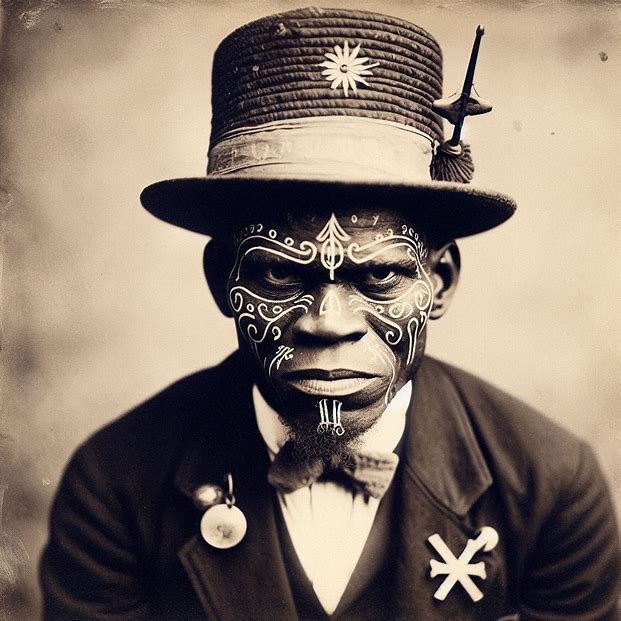
We make our way to the JuJu House, looking for possible Christian artifacts. Unfortunately the shop keeper, Silas, takes offense to our presence. We are confronted by several unfriendly types. Makunga seem to be the leader.
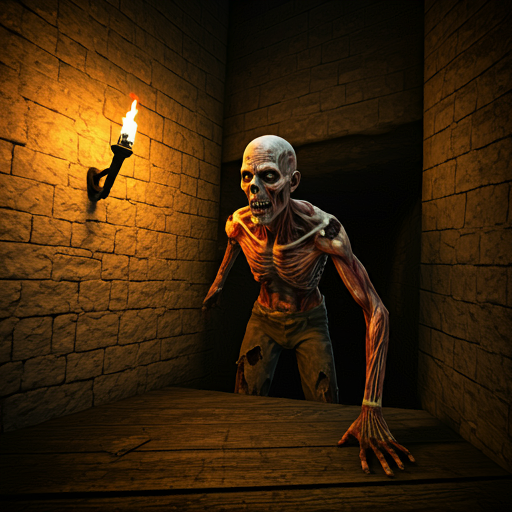
We over come them and make our way to the cellar. It was a horrific scene, a pit of death and what seems to be living dead come back to life! My Holy charge takes initative as I charge headlong in countering the ritual with the Lord’s words.
These ghoulish creatures attempt to bite and stop us. With the one true God as my strength I do everything in my power to disrupt the ritual. Unfortunately, it seems that they were able to complete it and summoned some abomination formed of sacrificed human. I had to fall back but I did find something of interest. A book titled, Africa’s Dark Sects.
Miriam, the librarian of Harvard, was quite knowledgeable. She had the Dark Sect, but it went missing. $10 is what the book I brought was worth. We have an appointment to bring Miriam to Ms. Carlyle’s on Wednesday morning.
Met with the boys at lunch and tried to figure out our next steps. Zeke is going to talk with his police contacts to provide some back up should we need it at the Juju House, Lord protect us if we do. HL is on his deadlines, working on leads for stories. He seems to work too hard, bless him. Robert will be going to his boxing gym and “other places,” to get some other assistance. Luigi didn’t make it to lunch, I hope he didn’t get into an accident or something…
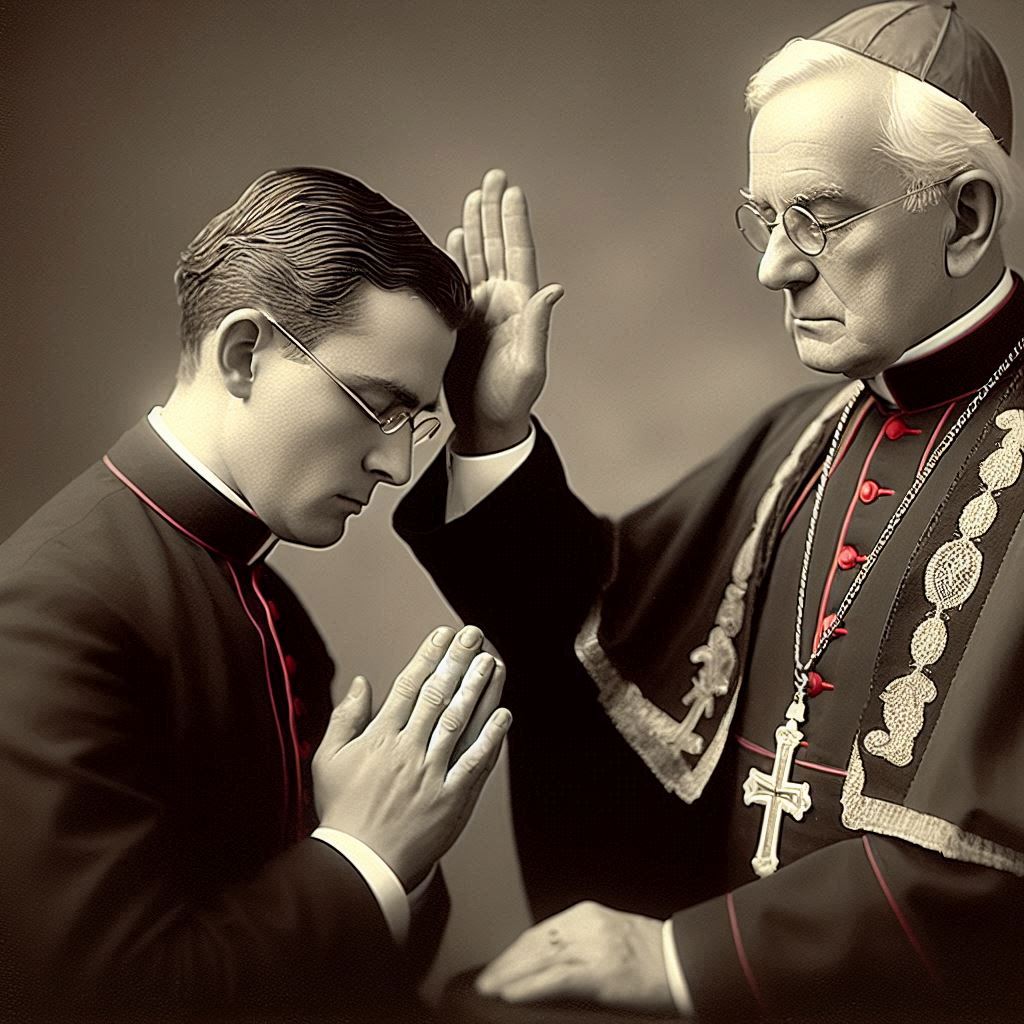
Cardinal Accardi visited he knew of the cult of bloody tongue, from Kenya, they can affect the mind of the weak willed. He wants me to be a warrior for God! This has become my new purpose, my charge!
Today started as a lovely celebration in Christ’s name, the sermon went well as usual. Deacon Klaus Hagh was most excited to try his hand at running a Monday service and asked to give a soliloquy during next Sunday’s service. Unfortunetly Erica Carlyle was not present. It seemed she had some happenings at her abode. Mr Grey her lawyer is present, along with Joe her…friend, she is being accused for the death of Jackson Elias.
Ercia was kind enough to talk with us regarding the whole ordeal. She admits that she was not sure about the exact details around her brother’s death but needed to have closure, whatever the cost. Through conversation, Ms. W’eru was possibly why Rodger Carlyle went on his expedition and Erica is not fond of her.
From the safe, new string surrounds a bundle of notes and books, one labeled the Pnakotic Text. Gesbard Denard wrote another one. People of the Monolith was a third. The final book was Life as a god, diary of Montgomery Compton regarding the Brotherhood of the Black Pharaoh which Ms. Carlyle was nice enough to let me bring to our librarian in Harvard to appraise.
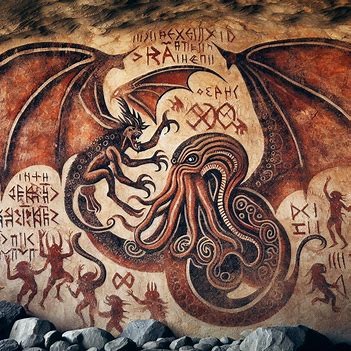
We board a train to meet with the Dr. Cowles. He is a wonderful gentleman and makes spectacular tea and biscuits! He was most distraught when the cult of the Bloody Tongue. After giving him some reassurances he revealed that there is similarity in the blood cults of Australia and this Bloody Tongue cult from Africa. There was talk of giants name r’lyeh, something called Cthulhu and the father of bats cult, obvious mythological and primitive ideology. Dr. Cowles mentioned a pnanotic manuscript, and a book at Harvard which we have already heard about may have more information. Another Australian Arthur McWurr found puncture marks on his expedition was the only link toward modern potential explanations of these cults still practicing but it may just be large mosquitos.
Most concerning was his discussion of a man name Silas who’s name was on the back of a business card for the Import business in New York. Silas wanted to try and actually summon one of these false idols. Most distressing. The Ju ju house is where we will can find Silas.
After witnessing yesterdays gruesome discovery, it would seem that Ms. Carlyle’s acquaintance, Jackson will no longer be bothering her anymore. His involvement with her brother, however, has me concerned that she may be in danger. A cult of some sort of voodoo hooligans have desecrated his body and any demon willing to do this is possible of anything.
Today H.L. and I went to see a publisher friend of his, a Mr. Kensinton, with the Prospero Press. He was a great source of information on the ways of voodoo and cults, purely academic of course. Mr. Kensinton was nice enough to provide details from Jackson stating Robert Carlyle may still be alive. This will certainly be concerning to Erica. The Cult of the Bloody Tongue has been identified by Jackson as the group believed to be involved with his own death as well as in the Carlyle Massacre.
Mr Kensinton has graciously offered to fund further investigation on what Jackson was researching. I held my tongue at the time for my concerns were for the safety of Ms Carlyle, but having a sponsor to find out the truth may be more helpful.
Our first lead was to follow up on the guest speaker at New York Univeristy and it seems Dr. Cowles is in Arkam. We were able to set up an appointment tomorrow at 2PM.
Got to visit the Chelsea Hotel today, seems to be a fancy place. Unfortunately my cause to visit was to perform last rights, but it is all part of Gods plan.
Got to room 410, the door was ajar, which seemed suspicious. Immediately, Henry swooned as he saw what was inside. God rest his soul, for it seems Jackson met an unfortunate end.
As the others rushed out after someone they thought they saw. On Jackson’s face, a hurriedly but carefully carved mark was placed on his forehead and his chest was splayed open; his internal organs were also placed in a neat order.
In the room we found a match book from the Stumbling Tiger Bar in Shanghi, a Penhew foundation business card and a photo of a large steam yacht, with the name beginning DAR…
Sir Aubre Penhew was in the original expedition, Erica has spoken about this foundation. It is based out of London, England.
The police showed up as expected and Zeke was able to aid in their investigation.
Journal of Robert Olmsted January 15th, 1925. New York
Until tonight, I had no idea why I kept in contact with Father Molokai, Zeke, Mencken, and Luigi over the last seven months. We’re an unlikely band of brothers, forged by a shared enemy—the Calafiore. Some of us stood against the syndicate by choice, others were simply in the wrong place at the wrong time.
Father Molokai had been making the rounds, keeping us connected. We must seem a sort of lost flock to the Father. Compared to him, we’re all lost to one vice or another, and a few of us well acquainted with several.
Mencken received a call from Jackson Elias. The call was short, but the desperation was clear. “They” were after him, closing in like wolves on a wounded deer. “They” would find him soon. Fear dripped from his voice, pooling on the receiver. Elias holed up in the Chelsea Hotel, room 410.
We piled into the Rolls Royce, Timmy’s foot heavy on the gas, while Zeke and Mencken weaved through traffic in the Packard. Parallel lines converging on the same point.
Inside the Chelsea, I took the stairs. My bum leg is always stiff for the first flight. Lifts are like coffins, I’ll only going in one after I’m dead. On the fourth floor, we met up again, me more winded than the others. As we stepped down the hall, our hearts pounding in sync. The hallway stretched before us, a dimly lit corridor leading to room 410. The air tasted of copper—sweet, metallic.
Blood.
The door was cracked open, revealing Jackson Elias sprawled on the floor. But it wasn’t just a body; it was a nightmare.
I’ve never seen so much blood.
I’ve seen plenty of bodies mangled and dashed during the war. I killed two men, that I know of, when our squad came under fire. I’ve watched men trapped in a train car, their eyes wild with fear and lungs releasing a sound that should not be of this earth, as the dark waters of the L’ignon swallowed them. I even beat one of the Calafiore’s bagmen to death with my bare hands. But I’ve never seen anything like this.
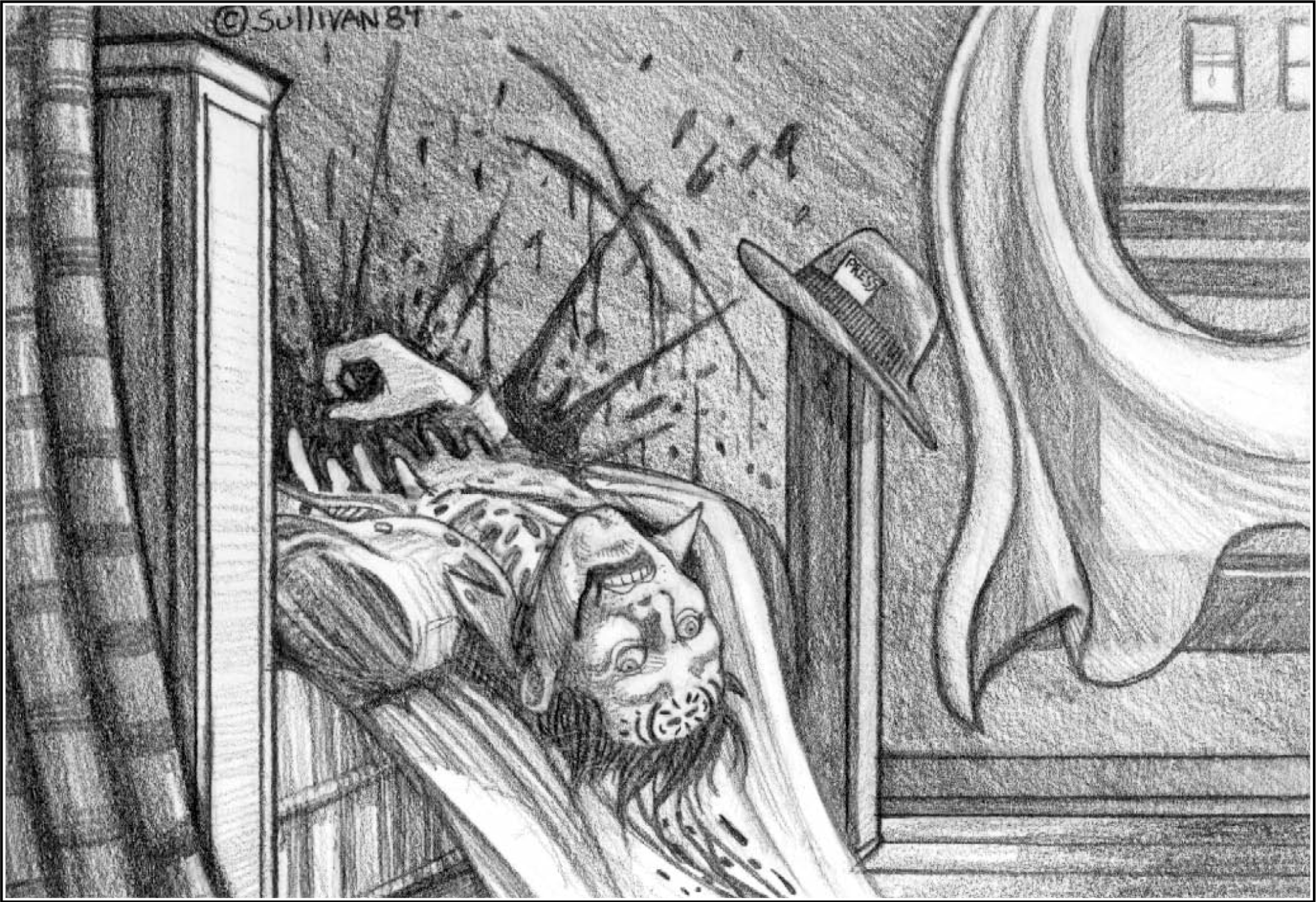
Blood pooled around him, a crimson halo. Jackson Elias’ ribs were cracked open, bones jutting out like the teeth of an upturned rake. What was left of the body was torn and sundered. Had something been pulled out of him? Pieces of Elias had— come off— in the struggle. My mind almost rejected the image, as if it culd not possibly be real. I don’t even think blades or tools had been used, just raw violence. What kind of strength could rend a man like that?
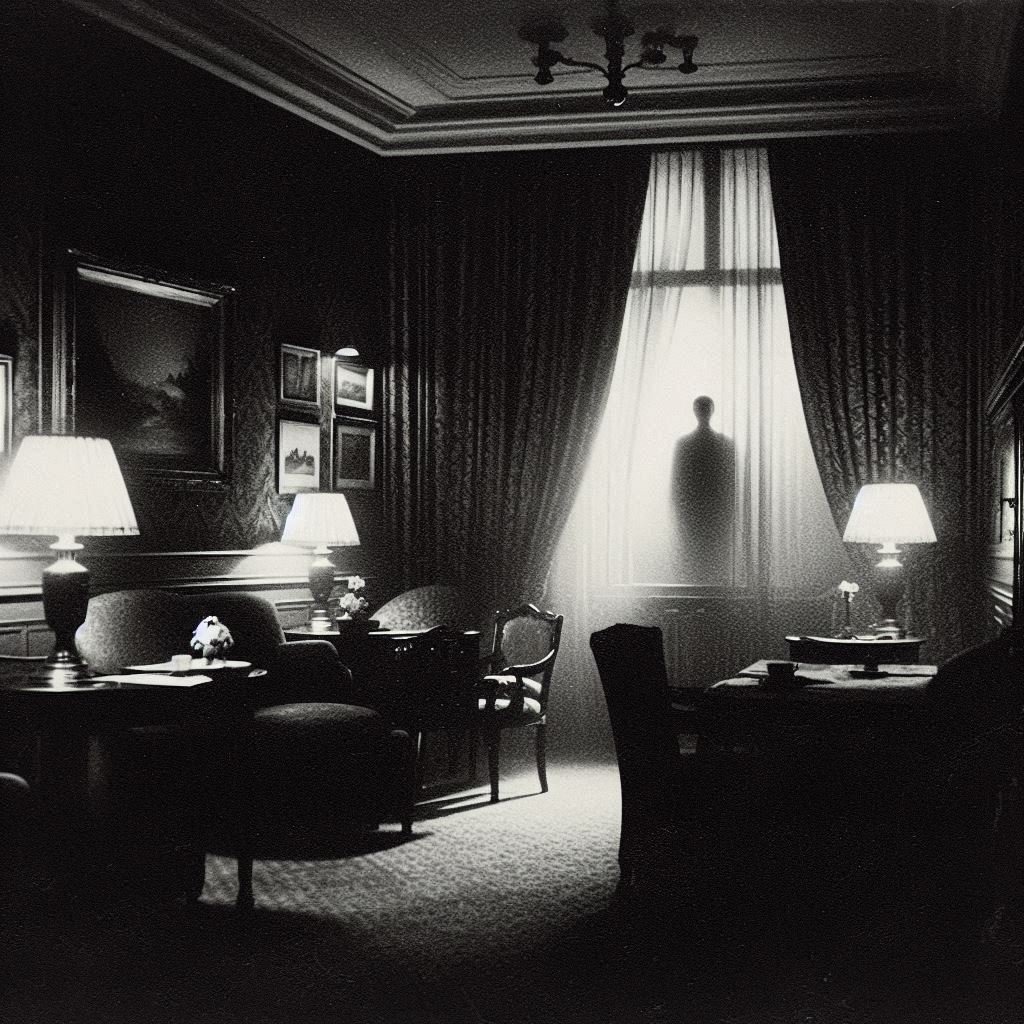
And then, a glimpse beyond the window. It was so brief and fleeting, it might have been a trick of the mind. A figure. Not human, at least not entirely. It could not be human. The figure beyond the window slid resistlessly into the night. Then there was only empty air left where it had been. That is, if anything had ever even been there. The room held its breath, and so did we. Jackson Elias was gone, but the horror remained—an indelible stain on our souls. Whatever hunted down Elias was gone now, but it was still out there somewhere.
I clenched my fists as something deep inside me awakened. There was fear and terror, and confusion. Those were, of course, the first things I felt when my knees weakened. But there was another, deeper feeling, growing stronger by the second. Something I hadn’t felt in a long time. A feeling I thought had been killed in me a long time ago. I hadn’t even fully seen the thing, but even so, I felt a peculiar sense of purpose. The destruction of this— thing— now seemed almost a duty.
If the others were going to take up the trail, and follow to settle what happened to Jackson Elias. I felt duty bound to help, and lay this— thing— to rest. I felt sure such things should not exist. We’d find answers. We broken, damned, and desperate. I’d welcome the priest along for the hunt too, because for all I knew the thing I just saw was a demon. I don’t believe in god, not after the things I’ve seen. Can’t bring myself to believe in god, not after the things I’ve done. But the thing that slipped into the night, out the window on the fourth floor, as easily as a man might step off a curb, was real enough.
So then, why am I now grinning with new resolve? It sounds blasphemous, but I feel alive again beside the carnage that had been Jackson Elias.
I like this feeling.
I’ll fight, and stare into the abyss until it blinks first.
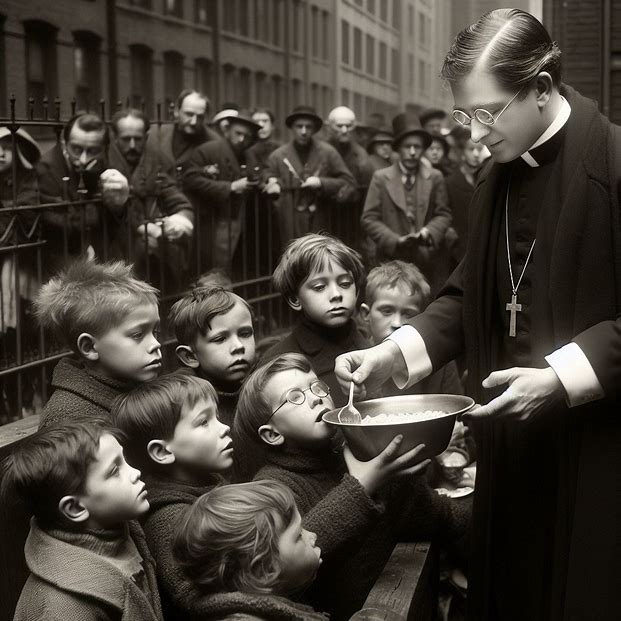
Local Father David Molokia spends the weekend feeding the poor in the Lower East Side. Our Lady of Mount Carmel parish has been known for their outreach to the poor and destitute. Their generosity truly knows no bounds.
Met with some interesting individuals today. Henry Mendkin, reporter, who Erica Carlyle ask me to find out were Jackson Illias has went. Also a gentleman named Robert who suffered a bullet wound. Luigi a humble shopkeep, Zeke who seems to be a flatfoot of some sort, perhaps a bit jittery, too much coffee?
My conversation with Henry seemed to be productive. It seems that Jackson has left the country which I am sure Erica will be at ease to hear. I will refrain from detailing what he is actually doing but should Jackson find something, Henry will let me know first. He is a good man, troubled, but a good man.
Journal of Robert Olmsted June 26th, 1924. New York.
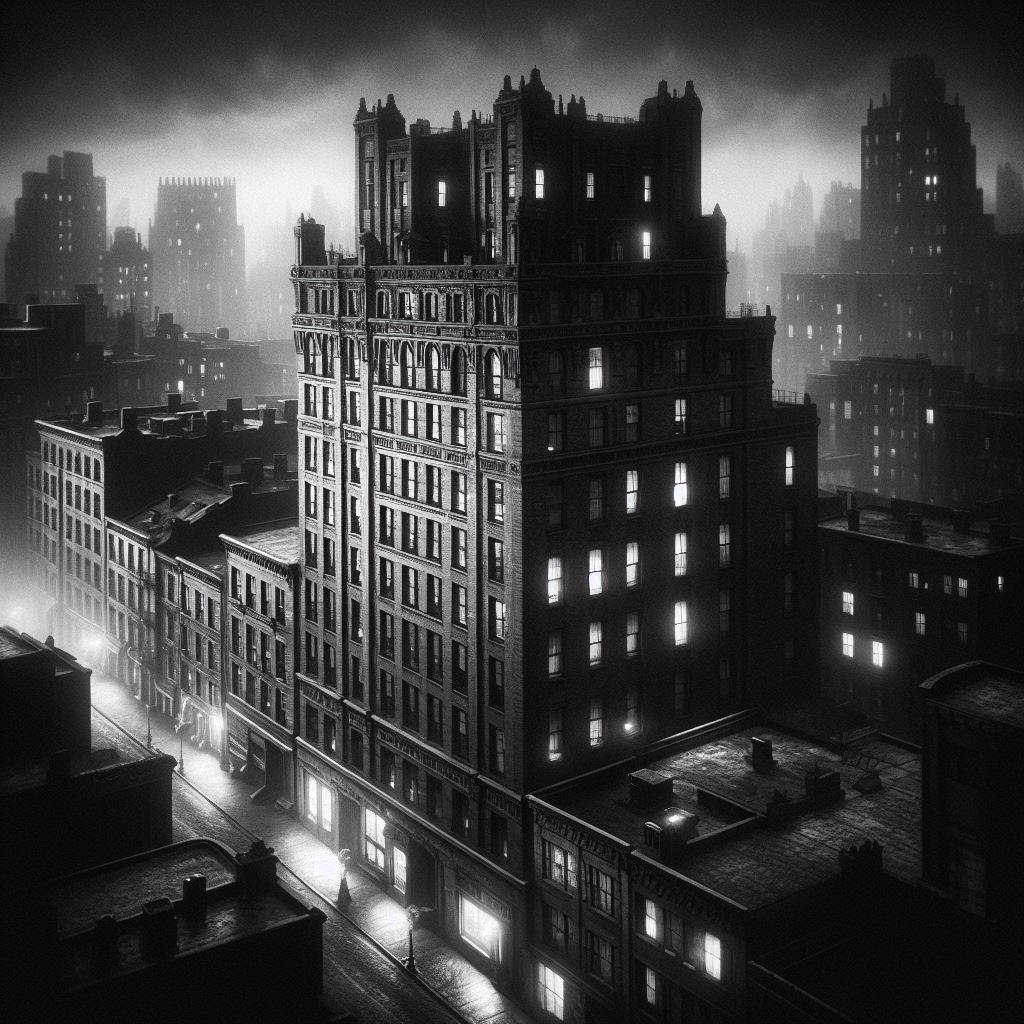
After the Calafiore caught up with me at the Ravenscroft Apartment Building, I had no choice but to continue my ruse. I had to go deeper, with the desperate hope that if sidled up to my enemy, their gaze might fall elsewhere while I plotted against them. I want to burn the Calafiore Syndicate to ashes, yet they never seemed suspicious that Robert was in need of money and would take the nothing jobs their other goons passed on.
In bed with those I despise— It was bound to go wrong from the start.
Now here I am, standing outside a corner store, watching a man put boards of the windows. Clearly the Calafiore had already been hounding this man. Harassing his business. It was easy to see from the way he moved that he could handle himself. Then again, so could I. My knuckles were already wrapped, in case I needed to apply pressure to the conversation. But I already knew, taking my first step forward that my heart wasn’t in it.
The Calafiore had me by the throat, and they didn’t take kindly to refusals. This man was the same, only swimming six months in my wake.
Luigi was the mark—the Calafiore portrayed him as a slippery rat. Their intelligence and contacts suggested in a previous life he had a penchant for running liquor through the veins of Chicago. Now, so it went, he called himself the Captain. But with the ire of Calafiore on him, his ship was sailing through murky waters. Luigi was dodging their toll booths, and they didn’t take kindly to this.
He wasn’t the slippery rube they made him out to be. Maybe the Calafiore gave me bad intel purpose and wanted us to kill each other.
In the store, the shelves were nearly empty, the shipments were running late, and you could tell they would never arrive. Even still, it was clear Luigi wouldn’t part with a dime. He would not give the Calafiore the satisfaction. I can admit I admire this about him.
It happened quicker than I thought. The the door splintered as the goons outside approached with guns blazing. Luigi dove behind his desk. I wasn’t so lucky and caught a bullet in the arm.
I thought my time was up. They had the advantage, and more importantly, tommy guns.
Fate had other plans. Outside a private dick named Zeke was parked, fedora pulled low. Mencken, the reporter, snapped photos from the seat beside him. There was a pause while goons reloaded, and inside, Luigi and I saw the heavies light a Molotov cocktail.
Before it could be thrown, Zeke’s bullet broke that bottle and flames crawled up the mobster’s coat. I couldn’t help but smile. That was a hell of a shot and the smell of cooking meat was grotesquely appetizing.
We bolted during the chaos that followed and saw the Calafiore reinforcements arriving en mass.
Running through the dirty streets, we nearly collided with a Rolls Royce—the kind of car that whispered secrets. Father Molokai sat in the back, looking almost tiny on that colossal bench seat. A priest had no business in such luxury. Weren’t they supposed to renounce worldly possessions? Religion was a sham, but even still, Molokai offered sanctuary. We piled in, and something unseen in the trunk clinked—a familiar sound. Luigi noticed it too.
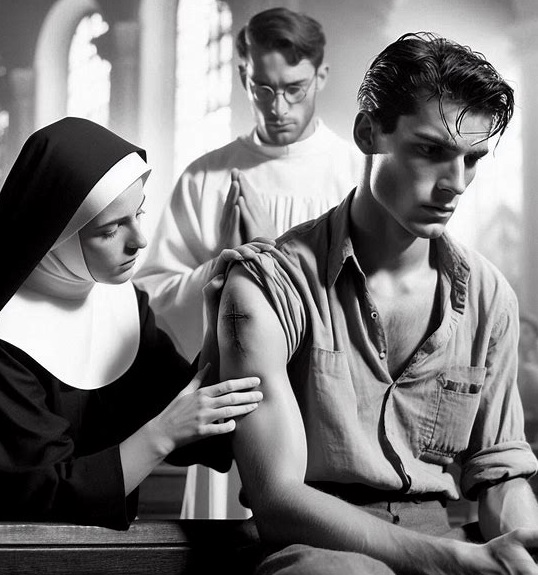
At the church, Sister Catherine stitched my wound. Lucky it was a through-and-through. Coincidence brought us together, and I smoked a few cigarettes as I watched the talk turn to Erica Carlyle, a woman with shadows in her eyes. Jackson Elias, the reporter, dug into her family’s secrets. If these blokes would be looking into this, then maybe helping them could in turn help me gain some much needed allies.
I had to play it cool with Zeke and Mencken though—no need to spill my history like cheap gin. Something told me they’d figure it out soon enough. I just needed to use them for my own ends before they unraveled the mystery.
As I stared at the bullet holes in my arm, I knew one thing: the Calafiore Syndicate needed to pay— I’d collect, even if it meant dancing with devils and priests alike. Honestly, the holy man made me the most uncomfortable. I took a swing from my flask, and then poured whiskey on the wound for good measure. The liquor washed away blood, but not my thirst for vengeance. Not in this city of smoke and sin.
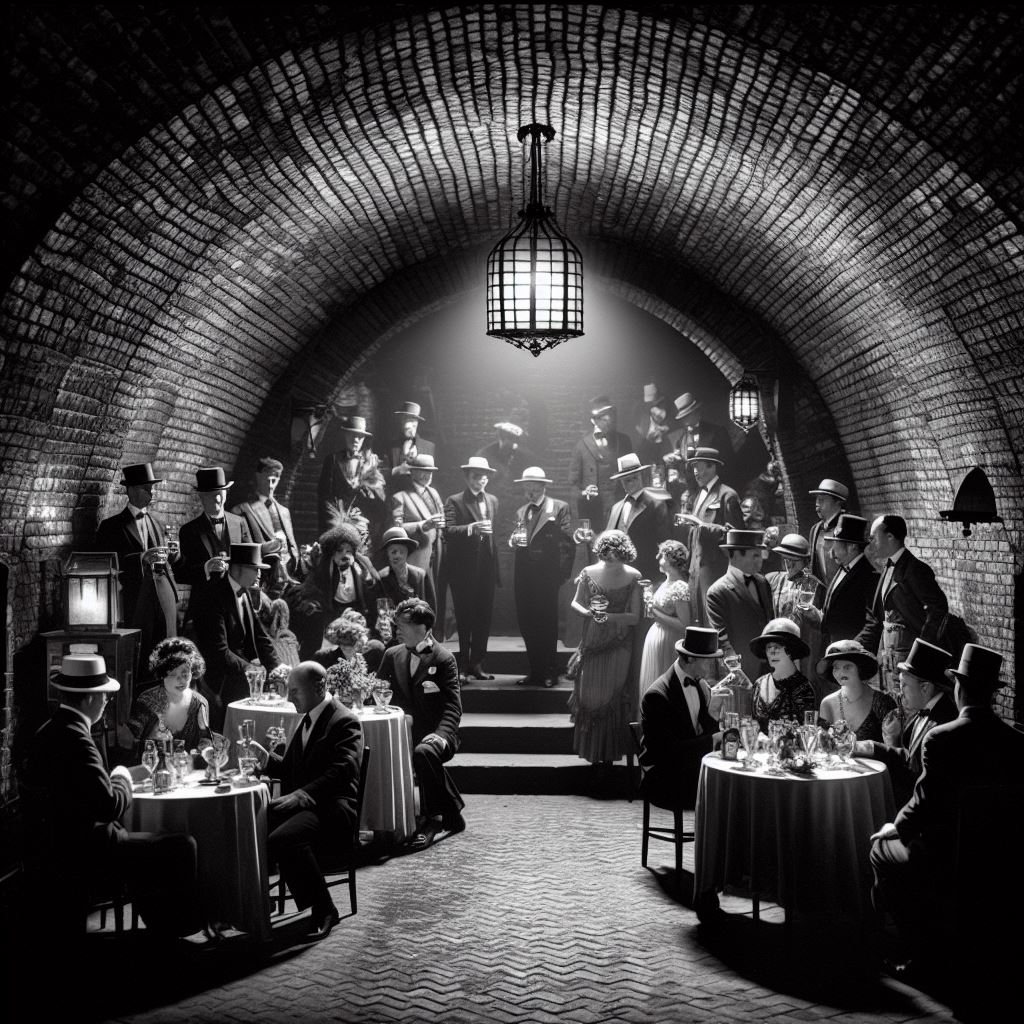
I've stumbled upon something extraordinary. I shouldn't even be saying anything, but I know I can trust you to keep this between us. It's going to sound crazy, but underneath the floorboard of the Smokey Hill Boxing Club, lies the best gin joint you could imagine. It must be some blocked off section of a tunnel below the old city, because it's built like a bunker. It can feel a bit claustrophobic, I'll grant you, but it also means folk can be as loud as they want and no one is going to hear.

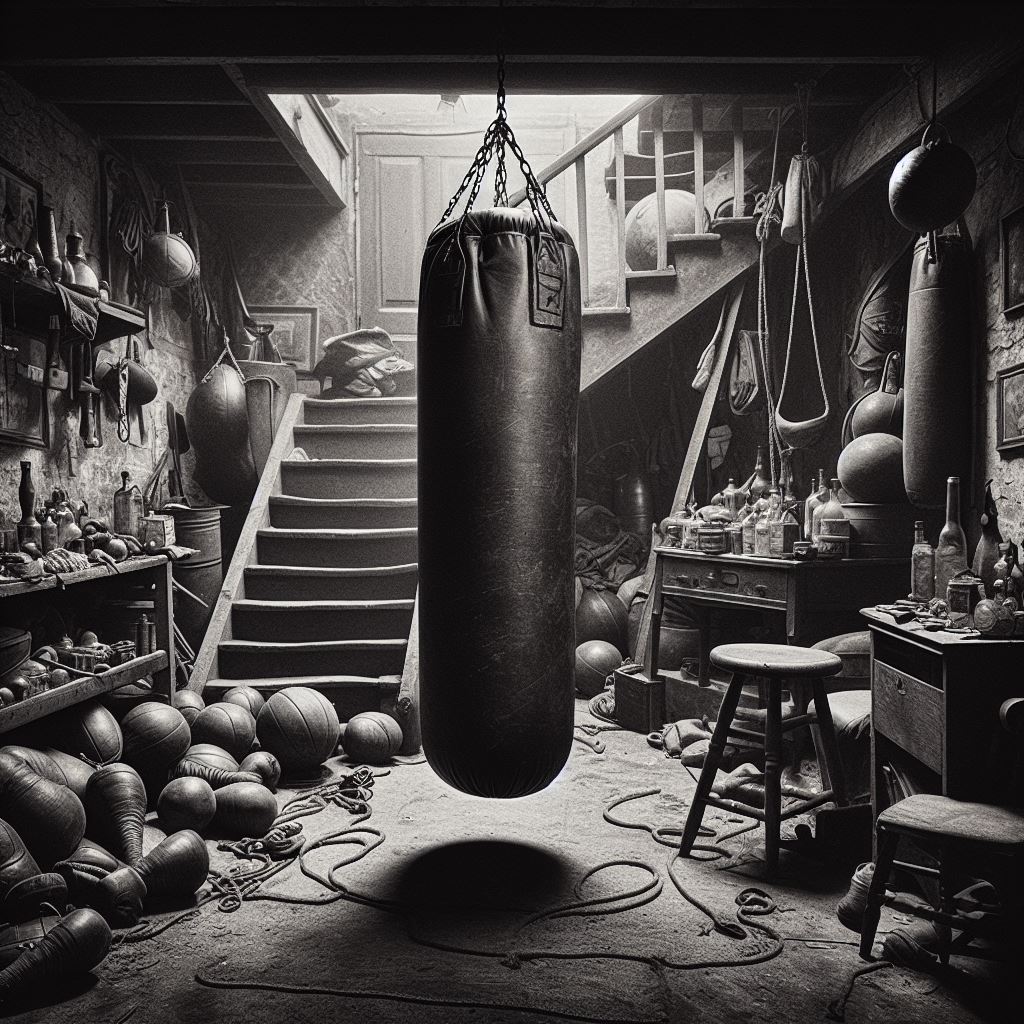
Here's the secret-- In the alley behind Smokey Hill, there will be a worker what looks like he's taking break. He's intimidating, he's built like a boxer after all. He'll be next to an unmarked door that leads from the alley into what must be a storage room, full of old punching bags and equipment. Just approach him and mention you're hoping to see a sparring match. He'll inform you when the next match is open to the public. He'll also add that it's illegal to bet on the matches. Now it's your turn to mention that it seems like everything is illegal these days. If you do it right, he probably won't say anything, he'll just turn and head inside. But he'll leave the door open. Head in behind him and be sure to close the door behind you. He'll head down a flight of stairs to cluttered room--and here's the important part-- DO NOT FOLLOW UNTIL HE CALLS YOU DOWN. He does something down there, unlock and opens a door that's basically invisible once closed.

Remember, secrecy is the key! Promise you'll keep this under wraps? Things will go bad if it gets out I told you. And things will go bad for you if you mess these instructions up. So be sure to read them a few times!

Hoping to see you at a "sparring match" soon,
Albert
To the attention of Captain Price--

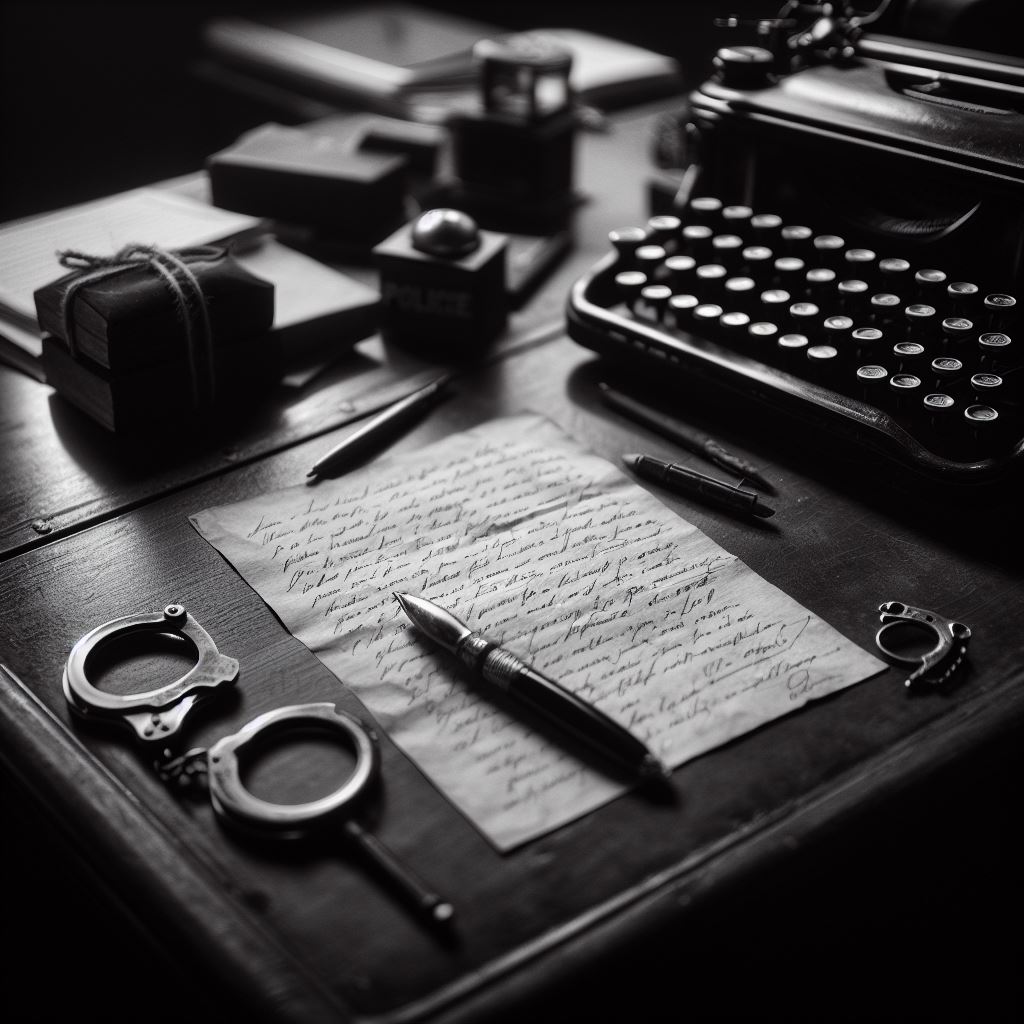
I take full responsibility for the results, or lack there of, following last night's operation. Despite these failures, I strongly recommend that we continue to allocate resources to locate Mr. Gage Morningset. Independent reports consistently suggest his significant involvement with the Calafiore Syndicate. Additionally, these same reports indicate he owes a significant amount of money that is seemingly beyond his ability to repay. I must state for the record that I think it is a mistake to dismiss Mr. Morningset as a person of interest. Furthermore, if he is truly indebted Calafiore orginization, as we suspect he is, that very fact could give us the leverage we need to turn him to our side in agreement for protection.

Furthermore, it would be prudent to extend our search efforts to include Mr. Robert Olmsted. Credible sources have confirmed that both individuals share a close friendship and have a history of serving together in the 16th Regiment of Engineers. I have done a little digging myself, and it was thought Mr. Olmsted had not been seen for some time, but neighbors recently have noted hearing activity in his apartment, located at 245 E 25th St. This is the old Ravenscroft Apartment Building.

I suggest we prioritize these leads and proceed with due diligence. It is a mistake to let these leads lie, even in the face of the lack of results from last night.

Respectfully,
Lieutenant Percy Campbell
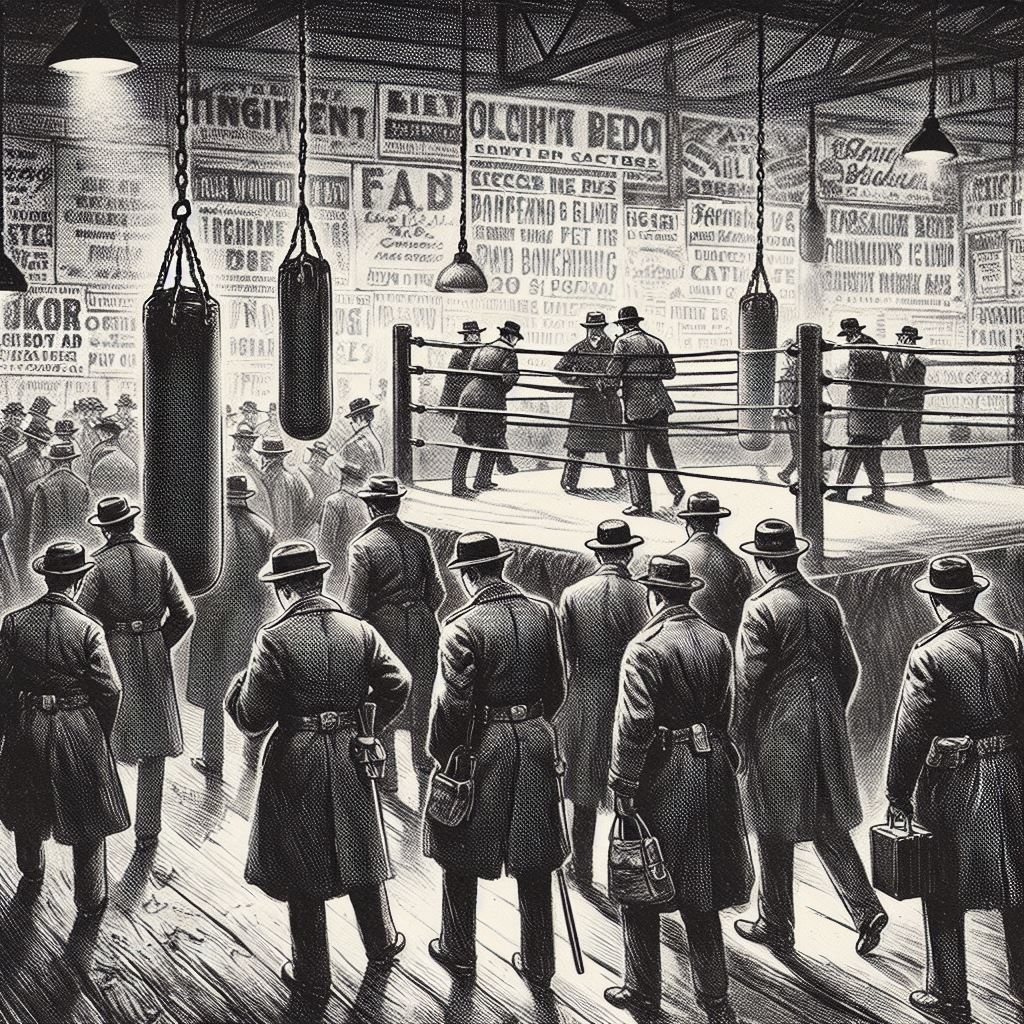
Officers search for trap door around and beneath the ring.
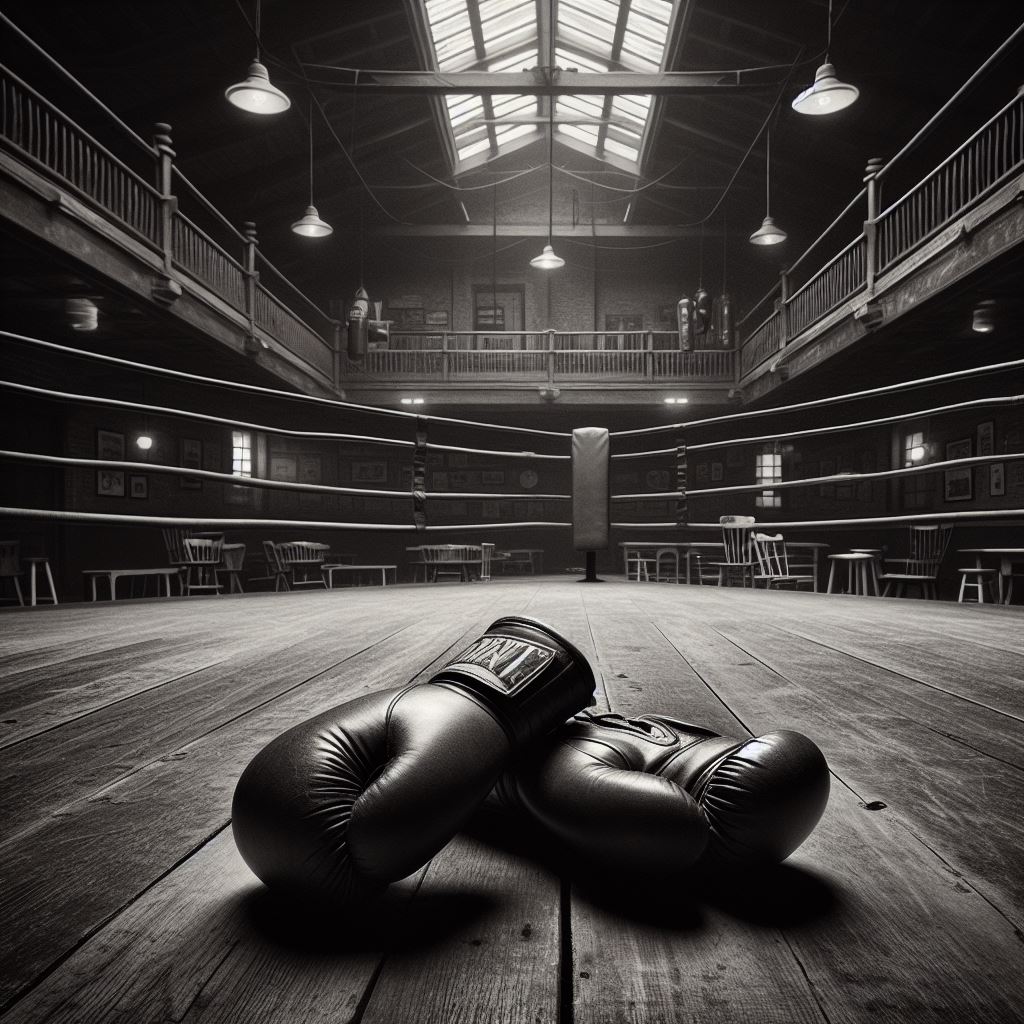
The New York Police Department’s war on liquor continued with daring operation last night, as local law enforcement officers descended upon the Smokey Hill Boxing Club, suspecting to find illegal operations hidden beneath its floorboard. The club, known for raucous and rousing sparring matches, had long been rumored to harbor one of the city’s worst kept secret gin joints.
Perhaps most surprising, the search was meticulous yet yielded nothing. Unnamed sources claim foul play, and that low-level bribes are in fact responsible for the raid’s lack of success. On the other hand, some on the scene laughed at the thought a trapdoor would be found beneath the boxing ring. To our eye, others on the scene seemed intent on finding nothing at all.
The police also sought the owner of the Smokey Hill Boxing Club for questing, a Mr. Gage Morningset. However, after the search was called off, and nothing of note found on the premises, officers have since declared that Mr. Morningset was no longer considered a person of interest.
Workers at the Smokey Hill Boxing Club deny any involvement in illegal activities.
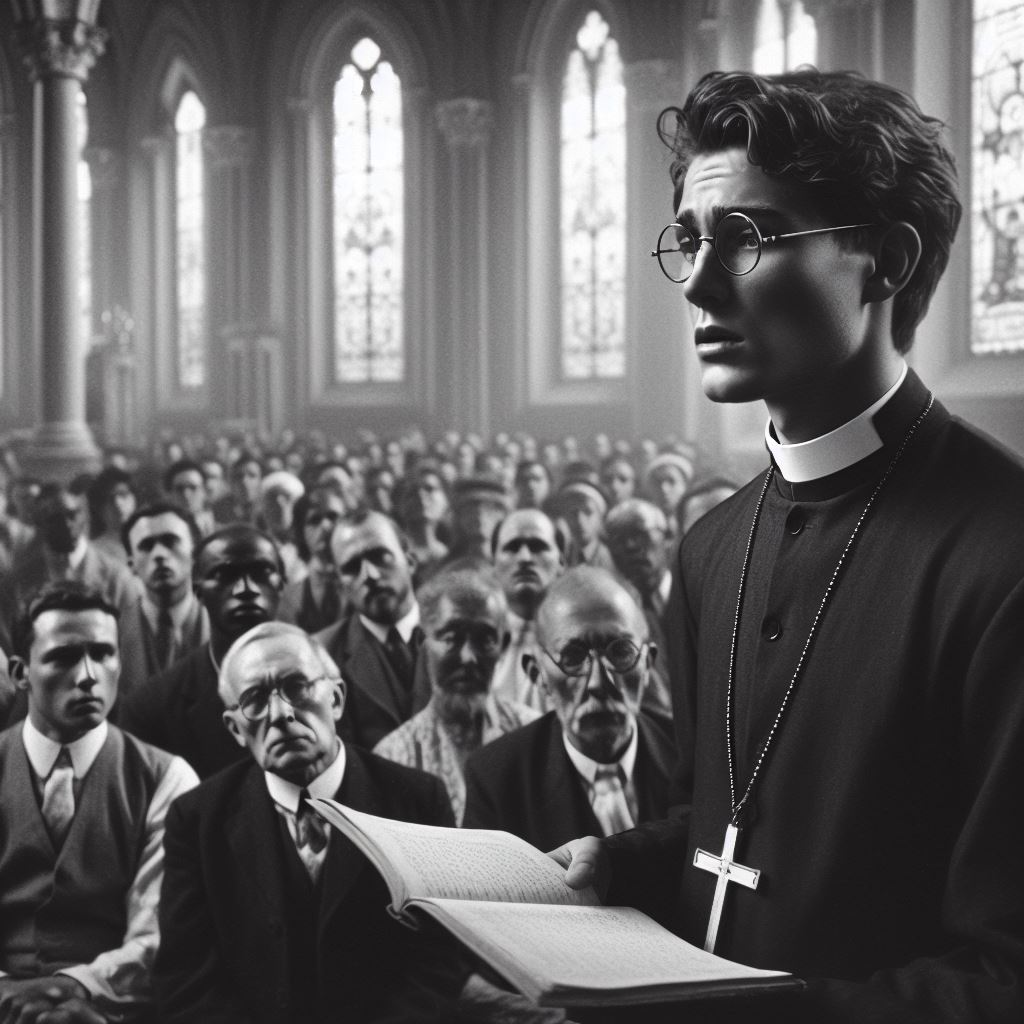
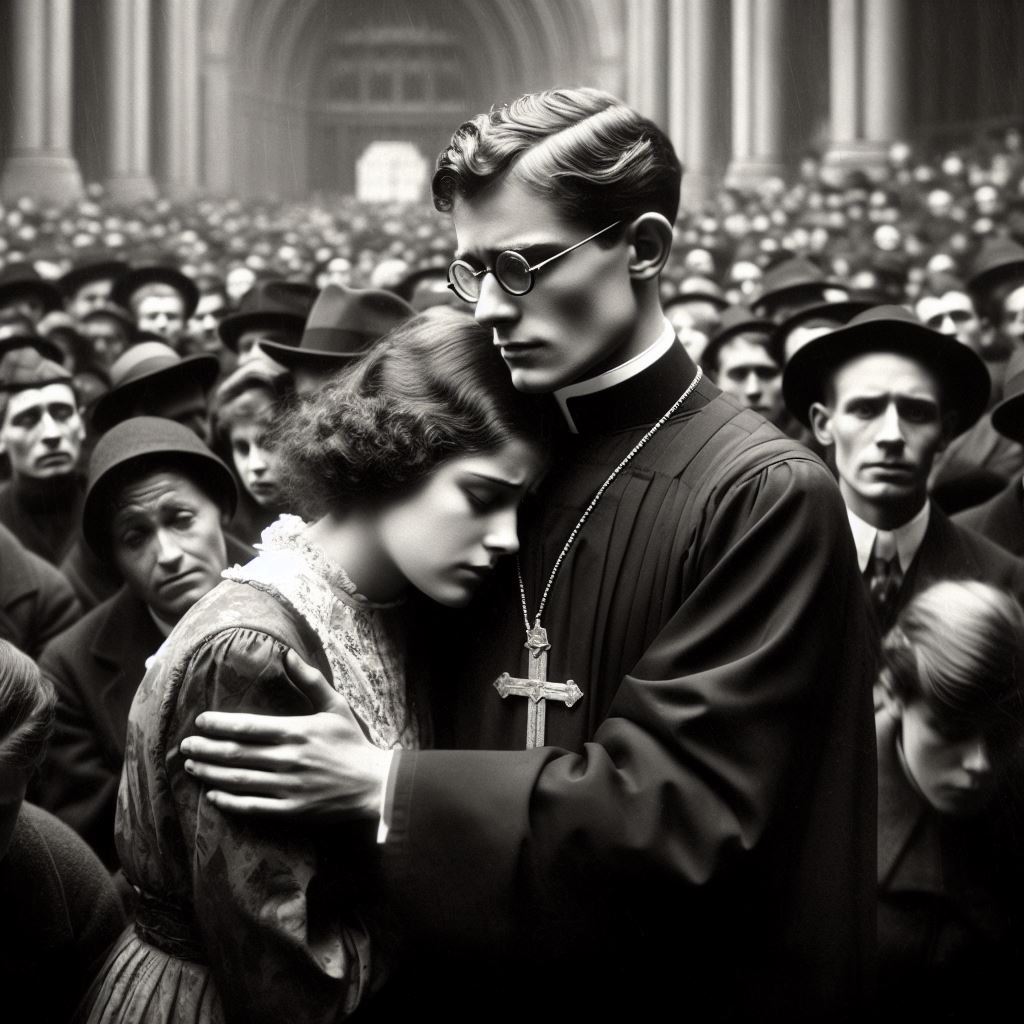
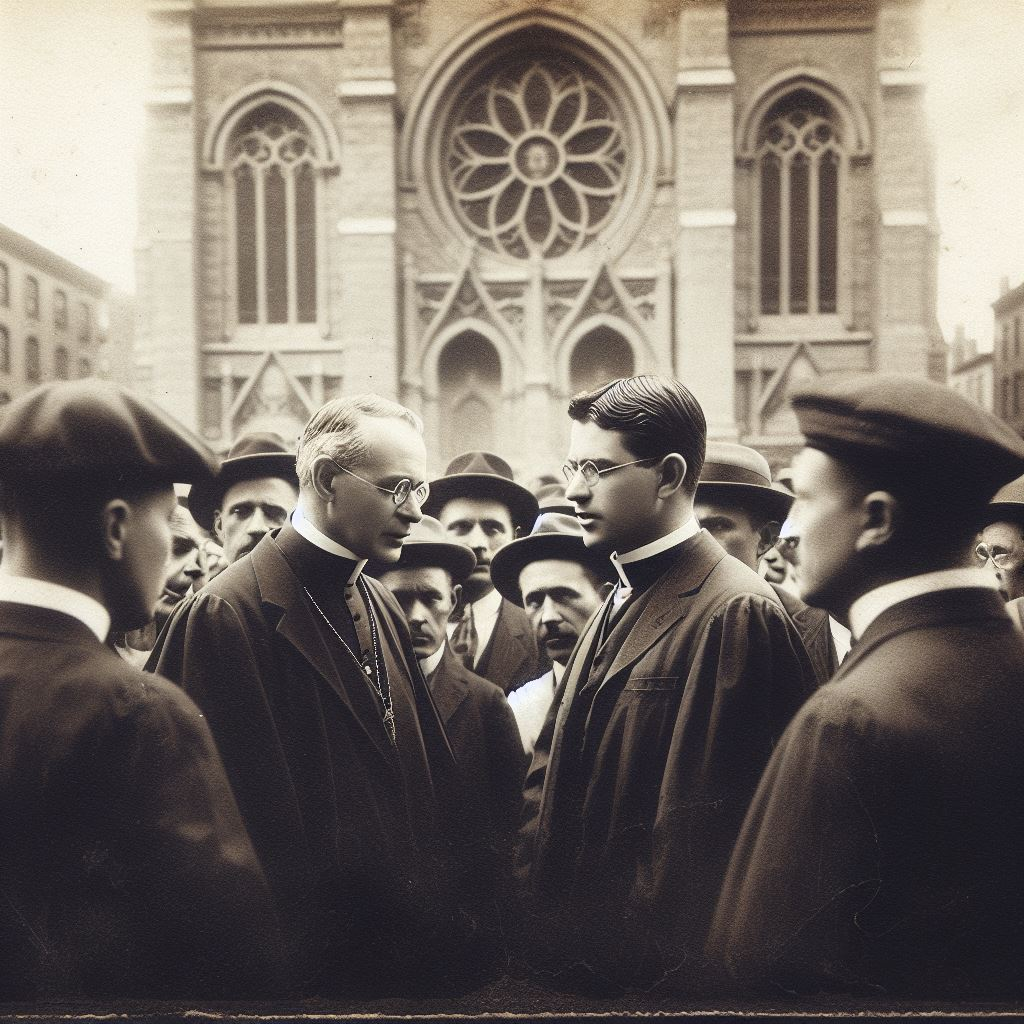
May 24, 1920, New York City — In the wake of the harrowing news surrounding the Carlyle Expedition Massacre in Africa, the venerable Father Molokai addressed his parishioners at St. Agnes Church yesterday evening. The dimly lit sanctuary, adorned with flickering candles, bore witness to the somber gathering as the young priest, known for his contemplative demeanor and round spectacles, stepped up to the pulpit.
The Carlyle Expedition, led by the enigmatic millionaire playboy Roger Carlyle, had embarked on a mysterious quest across the African continent. Their goals remained shrouded in secrecy, even to those who should have been privy to the details1. However, tragedy struck when news arrived that the expedition had met a gruesome end near Nairobi. The details were scarce, but rumors of debauchery and worse circulated among the city’s elite and those who followed the exploits of the Carlyle family.
Father Molokai, with his gentle yet resolute voice, addressed the congregation. His black cassock seemed to absorb the dim light, emphasizing the gravity of the moment. “My dear brothers and sisters,” he began, “we gather here today not only as a community but as a family united in grief. The loss of our fellow New Yorkers on the Carlyle Expedition weighs heavily upon our hearts.”
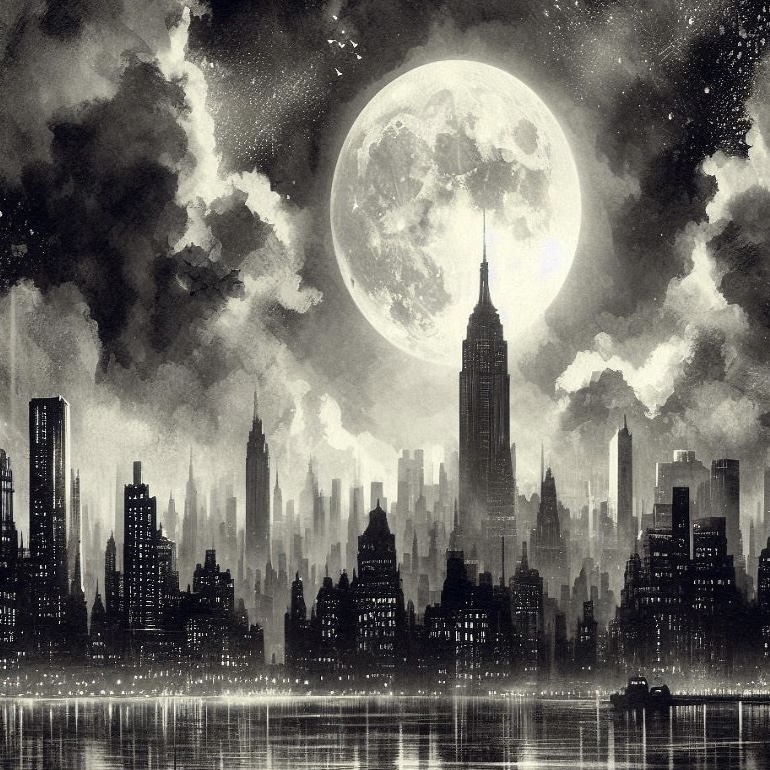
He paused, allowing the silence to settle. The Empire State Building, visible through the stained glass windows, stood tall against the evening sky, a symbol of resilience and hope. Father Molokai continued, “In times of darkness, we turn to our faith for solace. Let us remember those brave souls who sought answers beyond our city’s borders. Their quest may have ended tragically, but their spirit lives on.”
The congregation listened intently, their eyes fixed on the young priest. Father Molokai invoked the memory of the fallen explorers, urging his parishioners to find strength in their shared sorrow. “As we mourn, let us also celebrate their courage,” he said. “They dared to venture into the unknown, seeking truths that elude most of us. May their sacrifice inspire us to seek our own paths, to explore the mysteries of our existence.”
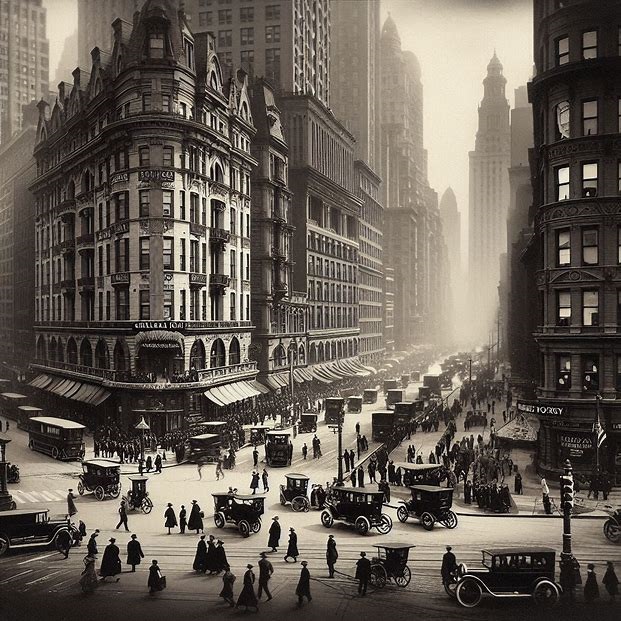
Outside, the bustling streets of 1920s New York City carried on, oblivious to the grief within the church walls. The sounds of carriages, distant horns, and the occasional jazz tune seeped through the heavy oak doors. But inside, Father Molokai’s words resonated—a balm for wounded souls.
As the congregation filed out, some wiping tears from their eyes, Father Molokai remained at the pulpit. His contemplative expression hinted at deeper thoughts, perhaps questions about the nature of fate and the purpose of human endeavors. The Empire State Building, illuminated against the night sky, stood as a silent witness to the priest’s consoling words.
And so, in the heart of the city that never sleeps, Father Molokai offered solace to a grieving parish, bridging the gap between the earthly and the unknown—a beacon of hope in a world still reeling from the Carlyle Expedition Massacre.
New York, NY – The vibrant neighborhood of East Village welcomes a new addition to its community with the opening of the Smokey Hill Boxing Club, located at 17 Stuyvesant St. This new gymnasium is not just a place to break a sweat; it's a hub for boxing enthusiasts and those looking to discover the sport.

Owned and operated by Gage Morningset, a veteran who proudly served with the 16th Regiment of Engineers, the club promises to bring the spirit of camaraderie and discipline from his military days to New Yorkers young and old.

The Smokey Hill Boxing Club plans to regularly host sparring matches, and  invites members of the community to witness the thrill of the sport.

For more information on membership and upcoming events, please contact the Smokey Hill Boxing Club directly.
Date: July 11, 1919

To: Lieutenant Percy Campbell
From: Special Agent Mark Mathis
Subject: Calafiore Organized Crime Syndicate

Summary:
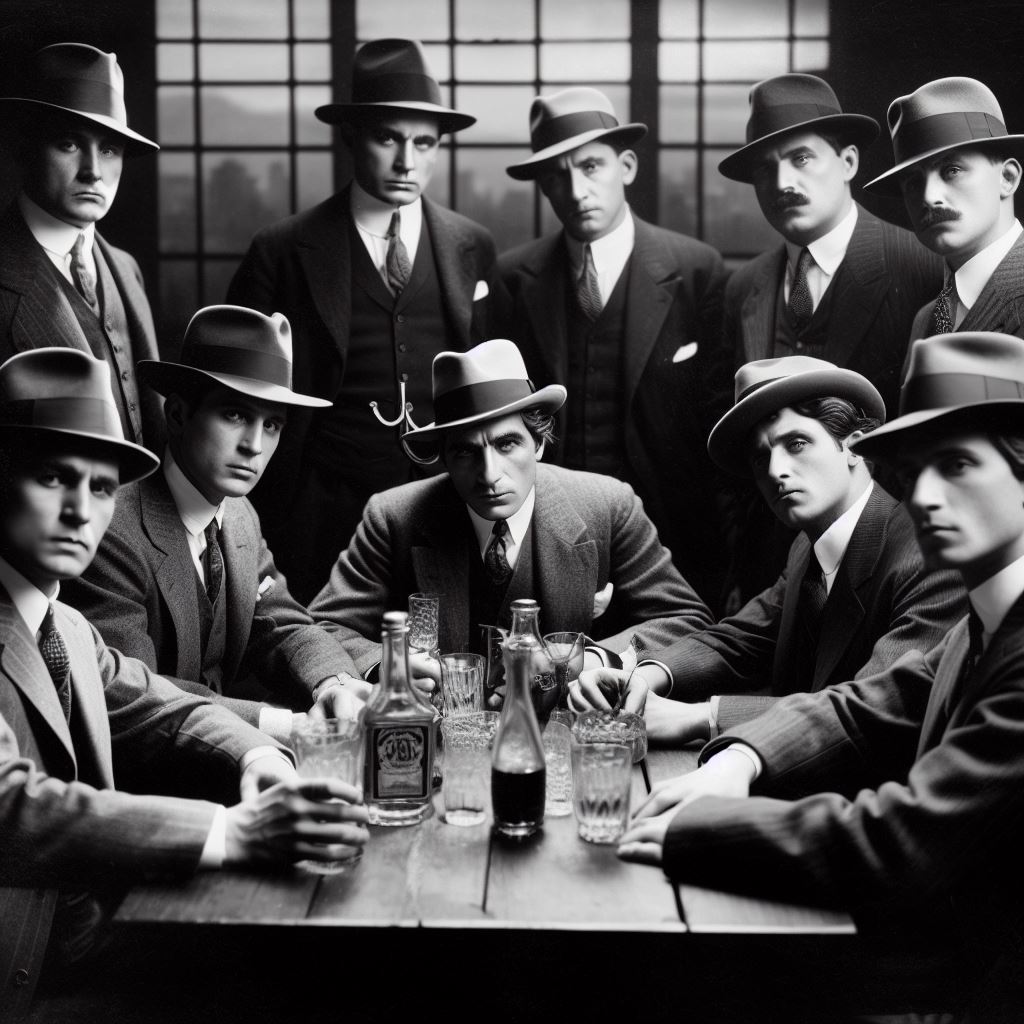
Per your request for intelligence, we can confirm all sources point to a significant rise in organized crime, directly correlated with the enforcement of Prohibition. The passage of the 18th Amendment has led to a proliferation of underground bars. We believe many of these establishments in your jurisdiction are protected by the Calafiore Syndicate. Please note, this is a sophisticated crime ring, employing violence and bribery to maintain their operations. Unlike syndicates we've previously encountered in the past, the Calafiore crime family is comprised of young and eager men, now taken to applying their training and skills from the war.

The heart of their operations are hidden establishments, dubbed **speakeasies** which require passwords or specific procedures for entry. Their secrecy is also maintained via payoffs and bribes, made possible by the Calafiore's recent and rapid influx of wealth.

The Calafiore Syndicate is currently headed by Corso Calafiore, commonly referred to as the Don. Luca Fini is the Don's right had man and main enforcer. We estimate the Calafiore Syndicate will soon amass fortunes estimated at $100 million annually from bootlegging operations. This criminal empire has extended their reach, enforcing protection rackets on local businesses and using bribery to secure immunity from law enforcement and politicians. Our ability to curb their operations will only diminish as their operations and wealth grows.

Please find enclosed a photo from our records of Coros Calafiore, Luca Fini, and other Calafiore Syndicate enforcers.
Special Agent Mark Mathis U.S. Bureau of Prohibition
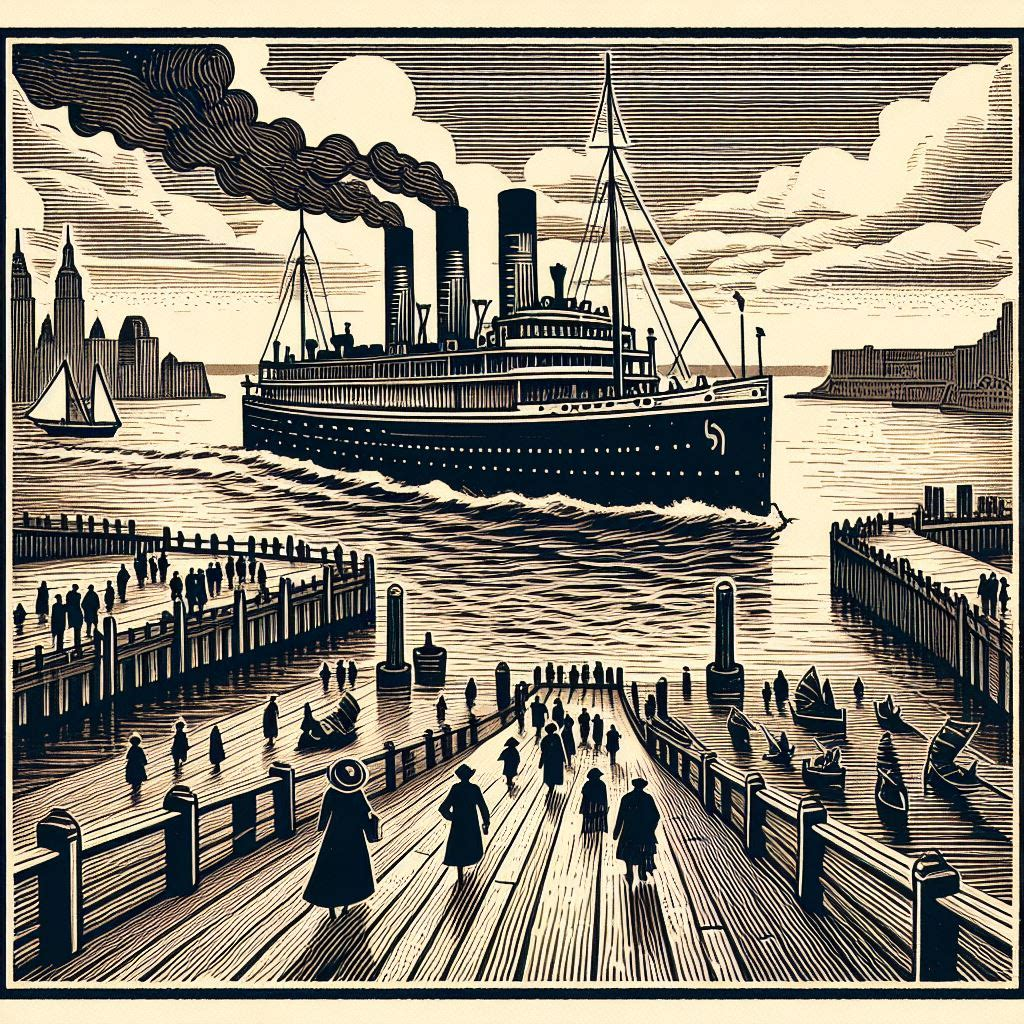
New York City, April 5, 1919 — The sun-kissed morning of April 5th witnessed a remarkable scene at the bustling docks of New York City. Father Molokai, the enigmatic priest known for his unwavering faith and mysterious origins, stood on the creaking wooden planks, his eyes fixed on the grand British steamship—the Im-perial Standard. The air smelled of salt, anticipation, and adventure.
The Carlyle Expedition, led by the flamboyant playboy Roger Carlyle, was embarking on a journey that promised to unravel ancient secrets and rewrite history. Carlyle, with his boundless wealth and insatiable curiosity, had assembled a team of extraordinary individuals. Among them, Sir Aubrey Penhew, the eminent Egyptologist, was the assistant leader, overseeing the excavation efforts. Dr. Robert Huston, a dapper ‘Freudian’ psychologist, accompanied the expedition, delving into the minds of the ancients through their cryptic pictographs.
Miss Hypatia Masters, a woman of both beauty and intellect, had once been romantically linked to Carlyle. Now, she wielded her camera with purpose, capturing every moment—the dust-covered artifacts, the sun-drenched desert, and the glint in Carlyle’s eyes. Her role extended beyond photography; she was the expedition’s archivist, preserving the fragile fragments of history.
And then there was Mr. Jack Brady, Carlyle’s confidant and general factotum. His rugged demeanor concealed a loyalty that ran deeper than the Hudson River. Whether it was deciphering hieroglyphs or procuring a rare artifact, Brady was indispensable.
But it was Father Molokai who held the crowd spellbound. Dressed in flowing black robes, his face etched with lines of wisdom, he seemed both ancient and ageless. His eyes, hidden behind round spectacles, bore witness to epochs long past. The Empire State Building loomed in the background, a testament to human ambition reaching for the heavens.
As the ship’s horn blared, Father Molokai raised his hands, palms outstretched. The crowd fell silent, their breaths held. The priest’s voice, resonant and otherworldly, carried over the din of the city. He invoked blessings upon the expedition, invoking the power and inciting the will of God. His words wove a protective cloak around the adventurers, shielding them from the perils that awaited in distant lands.
Roger Carlyle, usually nonchalant, bowed his head—a rare display of reverence. Sir Aubrey Penhew adjusted his pith helmet, his scholarly demeanor momentarily replaced by awe. Dr. Robert Huston, ever the skeptic, raised an eyebrow but did not interrupt. Miss Hypatia Masters, her camera poised, captured the scene—the priest, the expedition, and the promise of discovery.
And so, with Father Molokai’s benediction echoing across the harbor, the Im-perial Standard set sail. The city watched, a mix of curiosity and envy, as the vessel disappeared into the horizon. The Carlyle Expedition was bound initially to perform some research in London then on to Egypt, where the sands held secrets older than time itself.
As the sun dipped below the skyline, the Empire State Building stood tall, its steel and stone reaching for the same mysteries that beckoned the adventurers. As the boat cleared the safety of the harbor, Mr. Jack Brady lit a cigarette, his eyes squinting against the fading light. He knew that this journey would test them all—faith, reason, and desire—but he also knew that they were bound together by more than mere curiosity.
The Carlyle Expedition sailed forth, guided by the priest’s blessing, into the unknown. New York City whispered its hopes and fears, and the cloche-hatted pedestrians hurried along, oblivious to the epic unfolding in their midst.
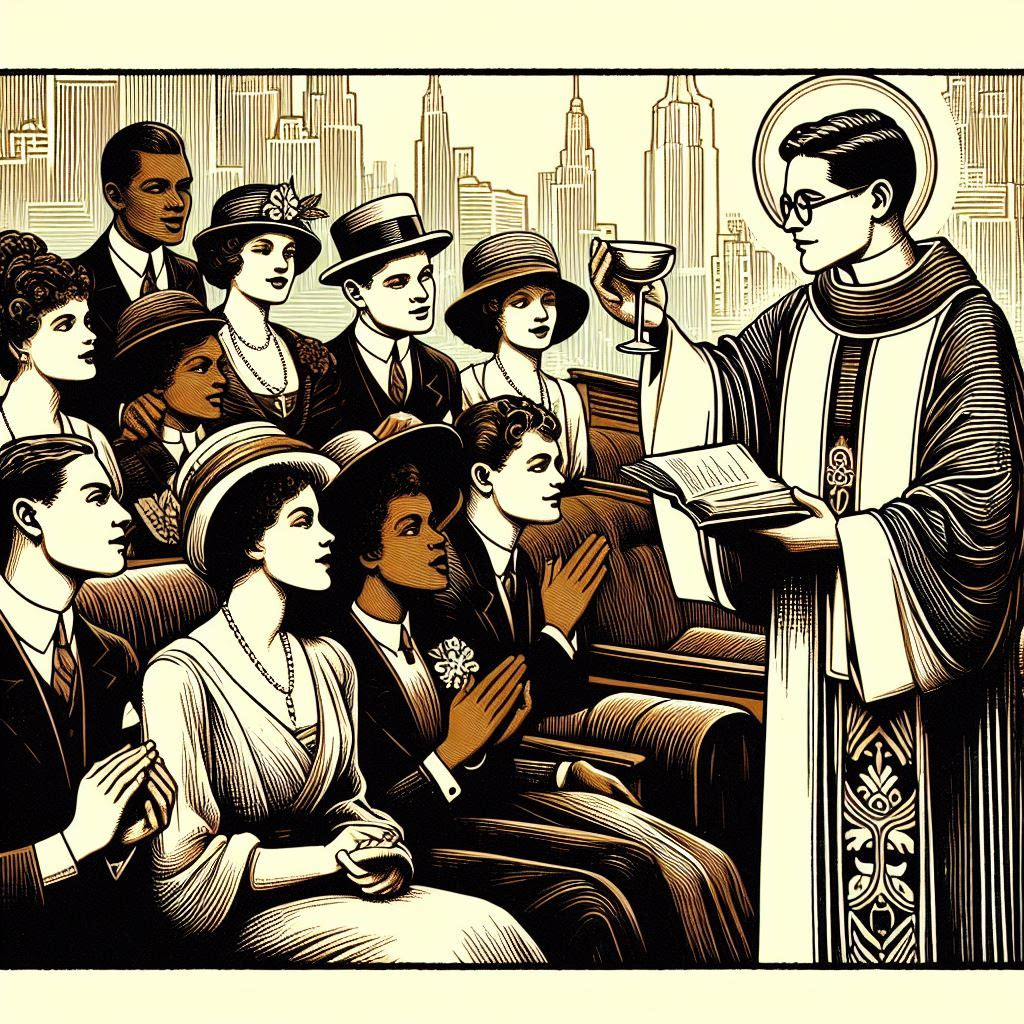
New York City, January 3rd, 1919. In a heartwarming ceremony held at Our Lady of Mount Carmel Parish, Father David Molokai was officially welcomed as the new priest. The historic church, nestled amidst the bustling streets of 1920s New York City, resonated with joy and anticipation as parishioners gathered to greet their spiritual leader.
Father Molokai, known for his unwavering dedication to his calling, arrived at the parish early in the morning. Dressed in traditional priestly attire, he exuded an air of humility and kindness. His round face, framed by wire-rimmed glasses, reflected both wisdom and approachability.
The church bells chimed as parishioners filled the pews. Families, young and old, eagerly awaited the moment when Father Molokai would step up to the pulpit. The stained glass windows cast colorful patterns across the wooden pews, creating an ethereal atmosphere.
As Father Molokai ascended the steps to the altar, he glanced around at the expectant faces. His eyes met those of Mrs. O’Connor, the oldest member of the congregation, who had been attending Our Lady of Mount Carmel since its inception. Her smile conveyed a sense of approval—a passing of the torch from one generation to the next.
In his inaugural sermon, Father Molokai spoke of unity, compassion, and community. His voice, resonant and soothing, filled the sacred space. He shared stories of his missionary work in distant lands, emphasizing the importance of love and understanding across cultures. The congregation listened intently, hanging on every word.
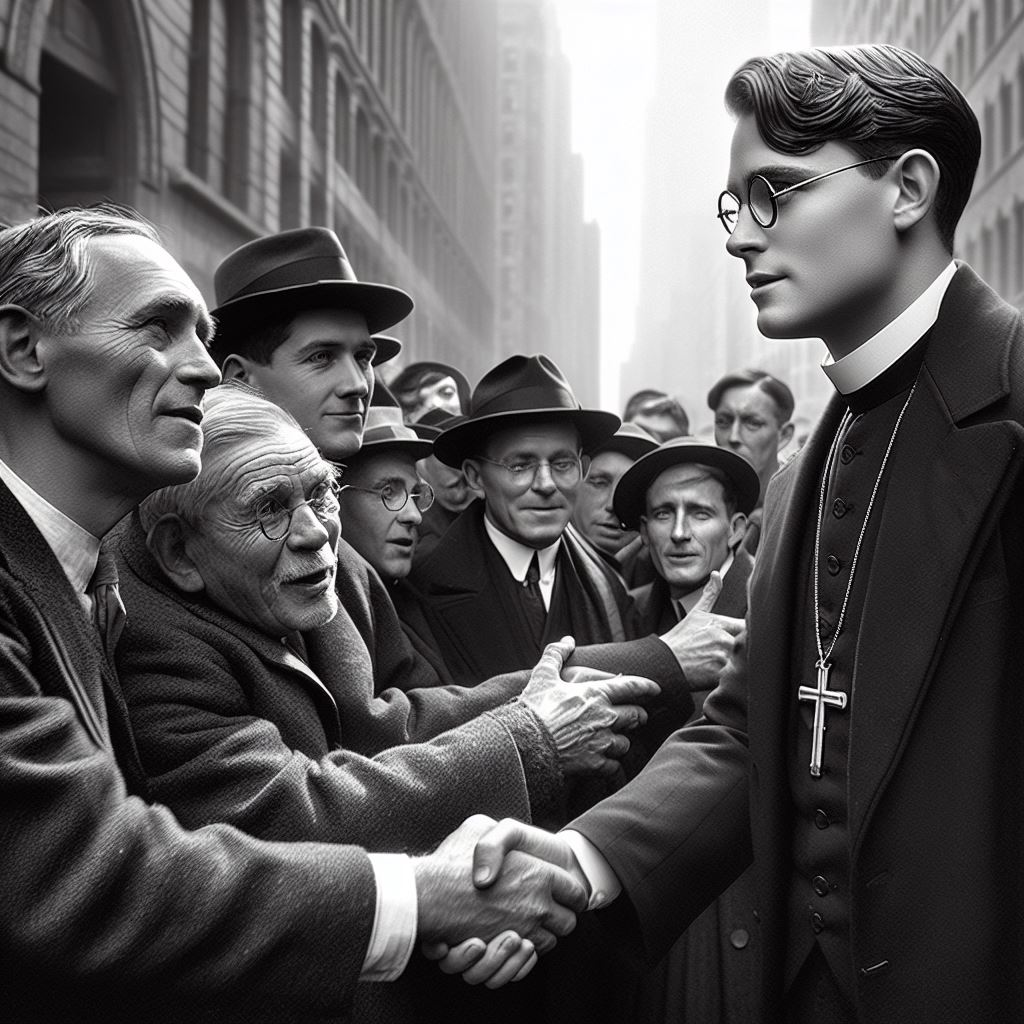
After the Mass, the parishioners gathered in the courtyard. Father Molokai stood near the entrance, shaking hands and exchanging warm greetings. Children tugged at his cassock, their eyes wide with curiosity. He blessed each one, leaving a sense of wonder in their hearts.
The sun dipped below the horizon, casting long shadows on the cobblestone streets. Father Molokai looked up at the Empire State Building, its silhouette dominating the skyline. He felt a deep sense of purpose—the weight of responsibility and the joy of serving this vibrant community.
As the evening prayers echoed through the church, Father Molokai knew that he was home. Our Lady of Mount Carmel Parish had embraced him, and he, in turn, vowed to guide them with compassion, faith, and love.
And so, on that chilly January day in 1919, Father David Molokai became an integral part of the tapestry that wove together the lives of New Yorkers—a beacon of hope in a city that never slept.